Qigong
Shaolin Qigong is not limited to Hard Qigong; the Seventy-two Arts of Shaolin can be considered the essence of Shaolin Qigong. There’s a common saying in the martial arts world: “Externally train the sinews, bones, and skin; internally train the essence, energy, and spirit (外練筋骨皮;內練精氣神).” The process from essence to spirit must involve transforming essence into energy and energy into spirit, highlighting the importance of Qi. Of course, Shaolin Kung Fu reaches higher levels, where Chan and Kung Fu become one. However, Chan pertains to consciousness, and Kung Fu to the physical body; how can they become one? This is most simply explained by Shaolin’s Six Harmonies theory, which includes the External Three Harmonies and the Internal Three Harmonies. The Internal Three Harmonies are: the heart harmonizing with the intent, the intent with the Qi, and the Qi with the strength. Again, Qi is indispensable.
A common phrase in practicing Kung Fu is: “Qi sinks to the Dantian (氣沉丹田).” As a health practice, both Buddhist medicine and Chan medicine, as well as traditional Chinese medicine, tell us: the cause of all diseases is the imbalance of Yin and Yang, where Yin and Yang refer to the two energies. The principle of all treatment and the sign of health is “Yin Ping Yang Mi (陰平陽秘),” balancing Yin and Yang, reflected in the interaction between the heart and kidneys. This represents the balance and exchange between the heart’s Yang Qi (fire energy) and the kidneys’ Yin Qi (water energy). However, given the great distance between the heart and kidneys, only the flow of Qi can facilitate this exchange. Therefore, all treatments in traditional Chinese medicine aim for this. Yet, Qigong’s guided practices achieve this more quickly and directly. Thus, Shaolin Qigong is a shortcut to connecting and communicating between Chan, Kung Fu, and medicine, and it is a key method in modern Chan practice. To give back to those who are destined, here are a few methods introduced briefly.
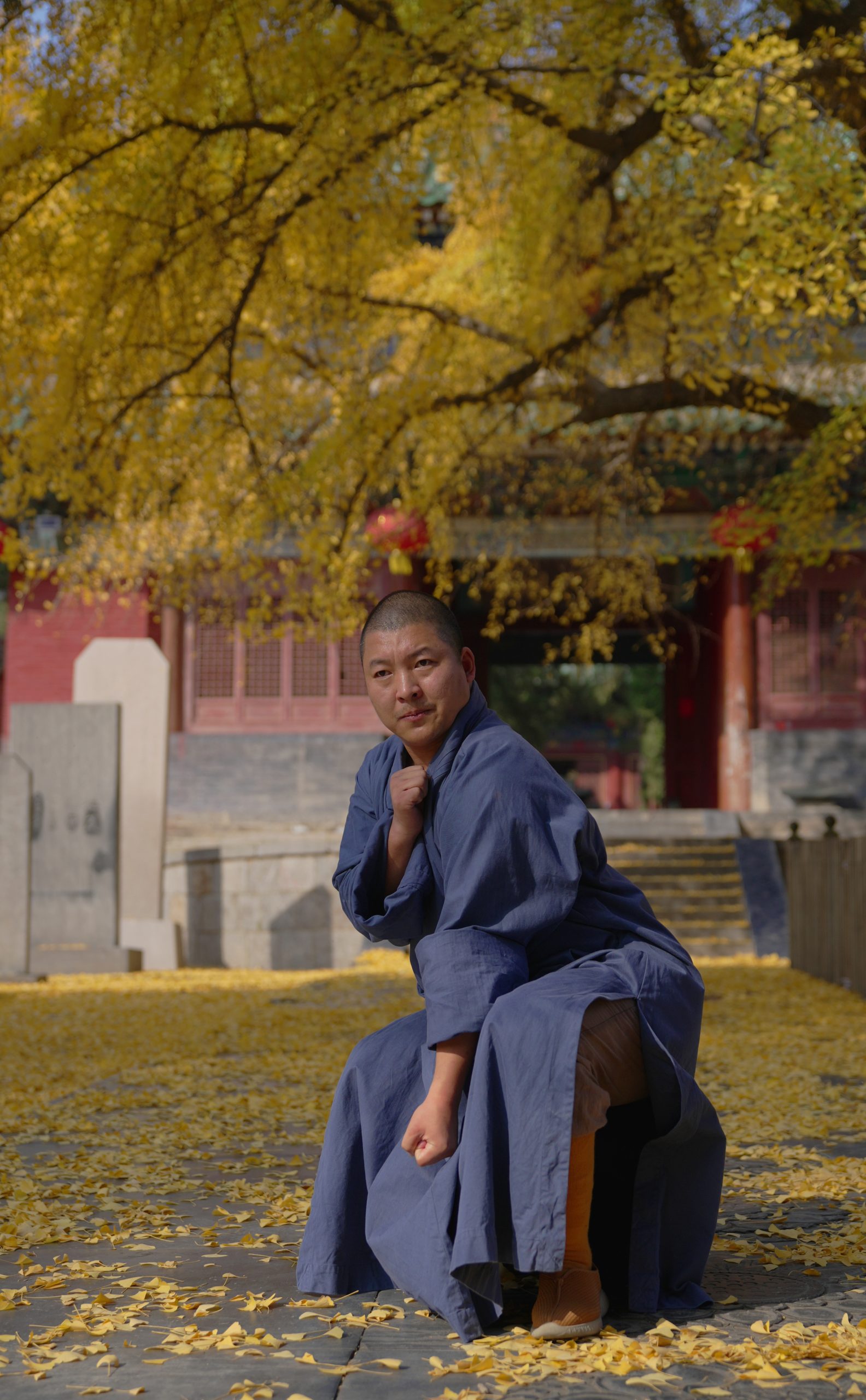
1. Meditation (i.e., Quiet Qigong)
Many aspiring practitioners enjoy meditation but struggle without proper techniques, leading to distractions, drowsiness, and an inability to persevere. Therefore, eliminating distractions is a prerequisite for meditation, and several methods can be summarized for this purpose:
First, the Breathing into Tranquility Method: This involves using breathing to eliminate distractions and achieve tranquility. One common technique is counting breaths, where one counts from 1 to 10 with each breath, ensuring no distractions arise. If distractions occur, one starts over from 1 and repeats the process. If one reaches 10 without distractions, there’s no need to continue counting, as the tranquil state has been achieved, and the method can be set aside. Another technique is following the breath, where awareness is kept with the breath, imagining guarding the breath, which can distract even the most restless minds. There are also other techniques like stopping the breath, observing the breath, returning the breath, and purifying the breath.
Second, Visualization into Tranquility Method. This involves visualizing internal scenes, such as certain body parts or acupoints. However, some people are very sensitive and may feel discomfort wherever they focus their visualization. Thus, visualizing external scenes like flowers, mountains, starry skies, or the universe is also an option.
Third, Mantra into Tranquility Method. For example, the Six-Syllable Mantra of Avalokiteshvara has six methods. After reaching a certain level with the above methods, one might encounter temptations to continue practicing, which are mainly due to strong ego attachment. This method can also be used to resolve such obstacles.
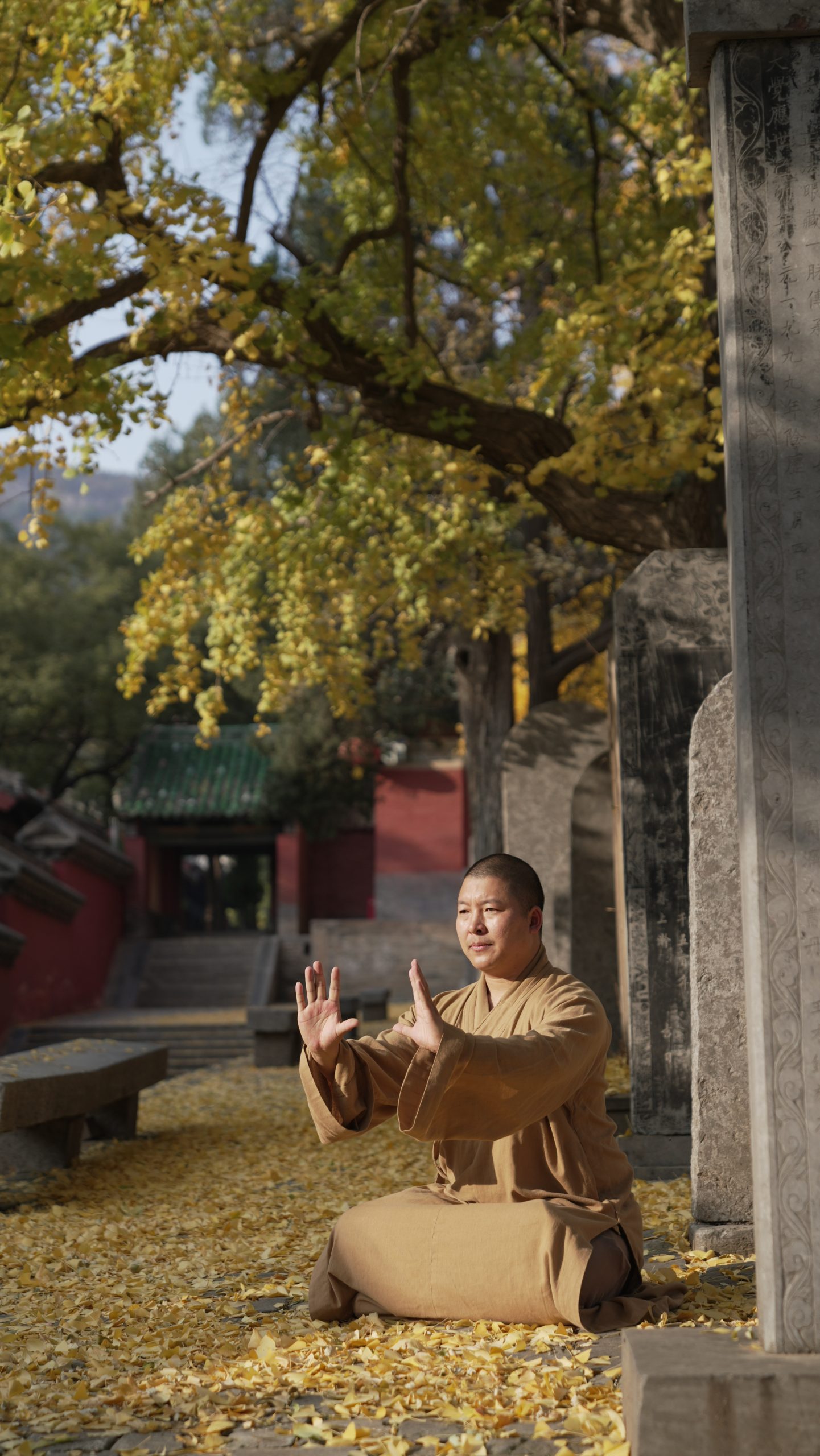

2. Zhan Zhuang (Standing-on-Stake Exercise)
As the saying goes, “a hundred practices are not as good as one stand.” Shaolin’s Zhan Zhuang is very famous. Here, we introduce a type of standing stake that integrates stake standing, breathing techniques, and visualization, also known as “Standing Chan.” First, stand with your feet apart at a width of three feet, squat down as if sitting on a chair, like a horse-riding stance, also known as the horse stance. This can be divided into high, medium, and low positions: in the high position, the knees are slightly bent; in the medium position, the angle between the knees and thighs is 120 degrees; and in the low position, it is 90 degrees. Choose the position based on your physical strength. Place your hands in front of your lower abdomen as if holding a 50 cm diameter energy ball, with the palms facing the lower Dantian. Imagine the ball collecting Qi and energy from the universe, encompassing the internal organs within it.
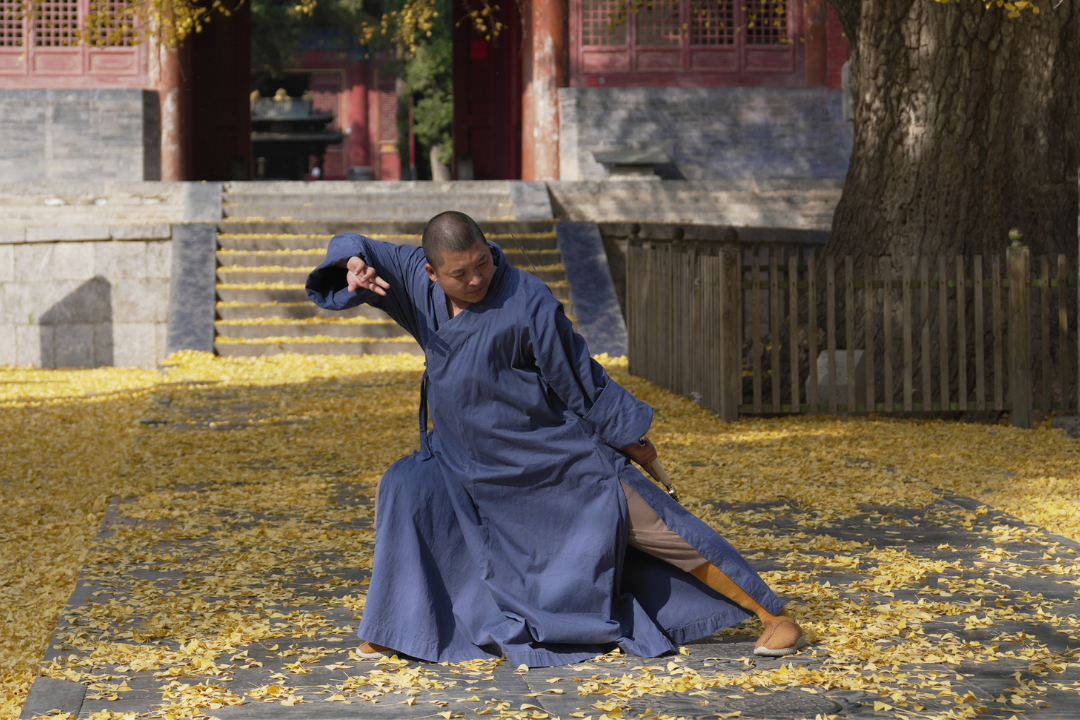
3. Dynamic Qigong of Shaolin
Dynamic Qigong involves not just movements but also the coordination of breath and intention. Through the physical language of dynamic Qigong, one can bypass the conceptual thinking of obstructive language, freeing the mind from the influence of acquired societal and linguistic concepts, and returning to the innate state of being, thus facilitating the realization of one’s true nature.
These are the basic methods and key points of introductory Shaolin Qigong practices. The three essential elements are adjusting the body, breath, and mind, with the latter being the most challenging. Therefore, it is important to meditate frequently. If you practice these exercises with the aim of enlightenment, you might alter your approach to think: I am not just sitting in meditation, I am the meditation itself; I am not just standing in a stance, I am the stance itself; I am not just practicing dynamic Qigong, I am the dynamic Qigong itself. To further elaborate: sitting is not just sitting, standing is not just standing, and dynamic Qigong is not just dynamic Qigong. It could be anything – a chicken, a cat, a dog, a duck, or any expression of your physical body or language. At that point, you would have attained realization. Of course, attaining this state is contingent upon mastering each practice and fulfilling key milestones in the foundational aspects of Chan meditation, including the commitment to vows and consistent advancement.